
Research tells us that having multiple close and meaningful relationships is a key protective factor in keeping kids stay healthy and safe. It is what makes kids more successful in school, have better mental health outcomes, avoid risky activities, and feel happier. The resources on this page are intended to provide parents and caregivers with the insight they need to build a strong parent-child relationship, to foster that connection during the teen years, and to help them build healthy relationships with others. For instructions to view this website in Spanish, click on en Español.
Families Connected Parent Resources
Featured videos: helping youth build healthy relationships

Leah Niehaus, LCSW offers expert advice in under two minutes.

Jennifer Elledge (Barber), MPH, CHES shares insight and specific tips for parents.
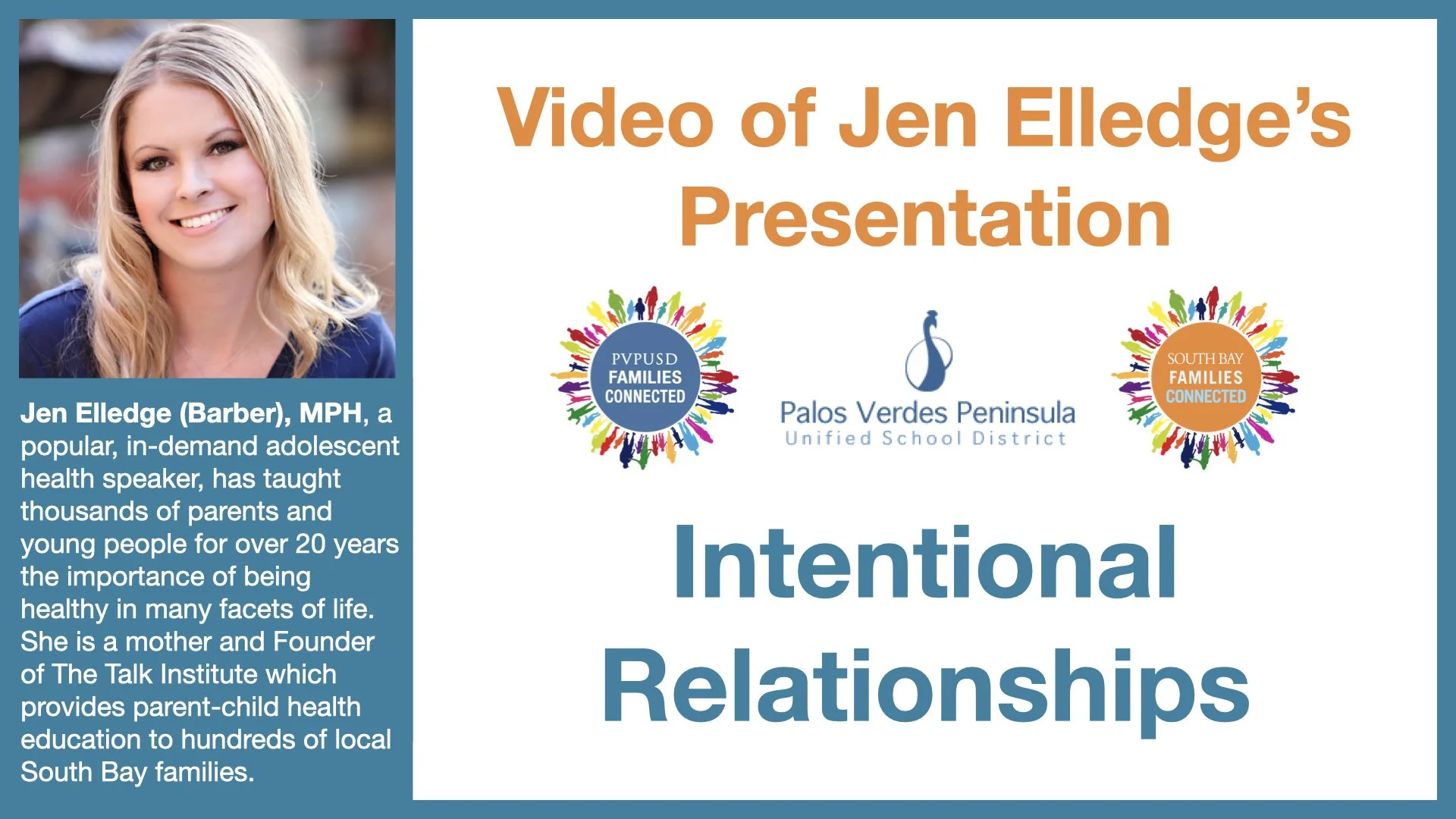
From an SBFC presentation given by Jennifer Elledge (Barber), MPH, CHES to PVPUSD parents
Tips and questions to help your teen build respectful relationships
click on the image to enlarge
Do they try to control you? (Examples, tell you what to wear, who to talk with, demand your passwords, or control how you spend your free time)
Do they fail to respect your boundaries? (Examples, pressure you to do things you don’t want to do, push you when you say no, or threaten to leave the relationship when they don’t get their way)
Do they put you down or make you feel small? (Examples, making jokes that are actually cruel, putting down your clothes, looks or interests, blaming you for their angry or mistakes, or comparing you to others to make you feel less than)
Do they use anger or guilt to try to control you?
Do they isolate you from friends and family?
Related Families Connected expert/parent blogs
The Power of Relationships by Jennifer Elledge, MPH, CHES
On Being a Mother and a Therapist by Leah Niehaus, LCSW
Embrace the Pause by Dr. Nicole Wesley
Curated Gallery of Resources
Clicking on the logos, images, and links below will take you out of the Families Connected website and to the online resource indicated. Families Connected is not affiliated with these organizations, nor have these organizations paid to have their resources shared here. Please note that, unlike the Families Connected website, some of the websites/articles included here may include pop-up ads. Families Connected will remain open in your browser.
National articles

Source: Greater Good Magazine
How Relationships Feed Your Brain (Greater Good Magazine)
How to Teach Your Teen to Recognize the Signs of a Toxic Relationship (Teen Dating Violence)
How to Deepen Your Relationships With Children (Greater Good Magazine)
How Understanding Middle School Friendships Can Help Students With Ups and Downs (KQED)
Positive Parenting: Building Healthy Relationships With Your Kids (News in Health)
36 Questions That Can Help Kids Make Friends (Greater Good Magazine)
Teaching Kids How to Deal With Conflict (Child Mind Institute)
Connect around the table
Research has confirmed what parents have known for a long time: sharing a family meal is good for the spirit, the brain, and the health of all family members. Recent studies link regular family dinners with many behaviors that parents hope for: lower rates of substance abuse, teen pregnancy, and depression, as well as higher grade-point averages and self-esteem. Click on the logo to access conversation starters and dinner games, download a free guide, and participate in the Family Dinner Project.
Related Families Connected Topics
More resources for parents and guardians
Resources for teens
For More Youth Wellness Resources, Visit:
For South Bay parents and caregivers

Go to South Bay Families Connected for educational events, the Virtual Teen Center, the SBFC monthly parent e-newsletter, and more. For mental health referrals and support groups, go to Beach Cities Health District.
For parents and caregivers in the U.S.A.

Visit the Families Connected landing page for non-region-specific, free youth wellness online resources.